
Technology
Think deep learning.
Think Rezlytix.
DIME, our Deep Information Maximization Engine, uses vision-AI foundation models and your well data to turn the seismic you already own into super-resolution datasets with up to 5x higher resolution.
Turning data into opportunity
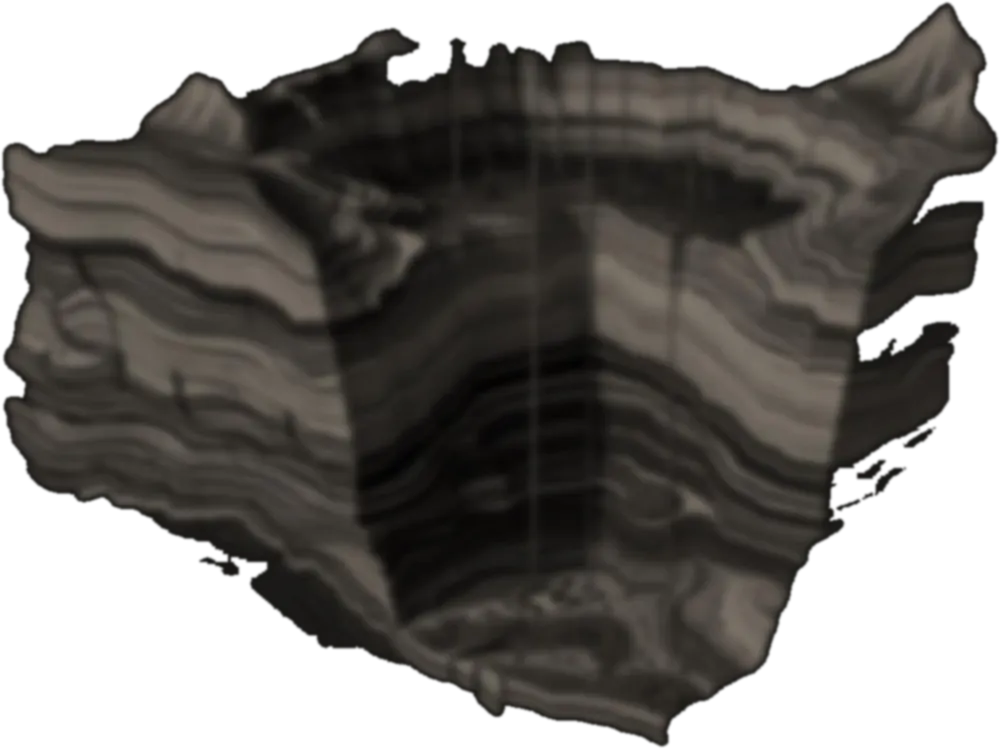
The thin-bed challenge
Limited resolution makes reserves hard to find
Imprecise subsurface models, built on data with limited resolution, make it challenging to locate oil and gas reserves accurately. The cost shows up in three places.
-
Drilling cost and risk goes up
Wells are placed on models that cannot resolve the thin units that matter.
-
Environmental impact goes up
Every well drilled to reduce uncertainty adds to the footprint.
-
Discovery and production goes down
Thin, subtle pay stays hidden, so reserves are missed or bypassed.
The question behind every well
Should you drill what you cannot see?
Try it
Why thin beds disappear
Drag across the wedge. As the bed thins, the conventional image merges its top and base into a single event, while a higher-bandwidth image keeps them apart. Super-resolution is how you get that extra bandwidth from the data you already hold.
20 m
Illustrative model: a bed thinning from 60 m to zero at 3,000 m/s, imaged with two wavelets. Not customer data.

DIME
Deep Information Maximization Engine
Super-resolution technology
that reveals geology not seen before
Bias- and assumption-free deep learning for simultaneous seismic and property modelling, with multi-band information injection to optimise accuracy.
DIME uses well properties to increase the information in 3D volumes. The result is a super-resolution dataset that reveals thin beds and finer stratigraphic detail, and every Rezlytix product is built on it.
Same data. A deeper tomorrow.
How DIME works
From the data you already own to up to 5x super-resolution, in three steps.
-
01
Your existing data
Legacy seismic with limited resolution, together with the well data you already hold.
-
 02
DIME engine
Vision-AI foundation models, guided by well properties injected across frequency bands.
-
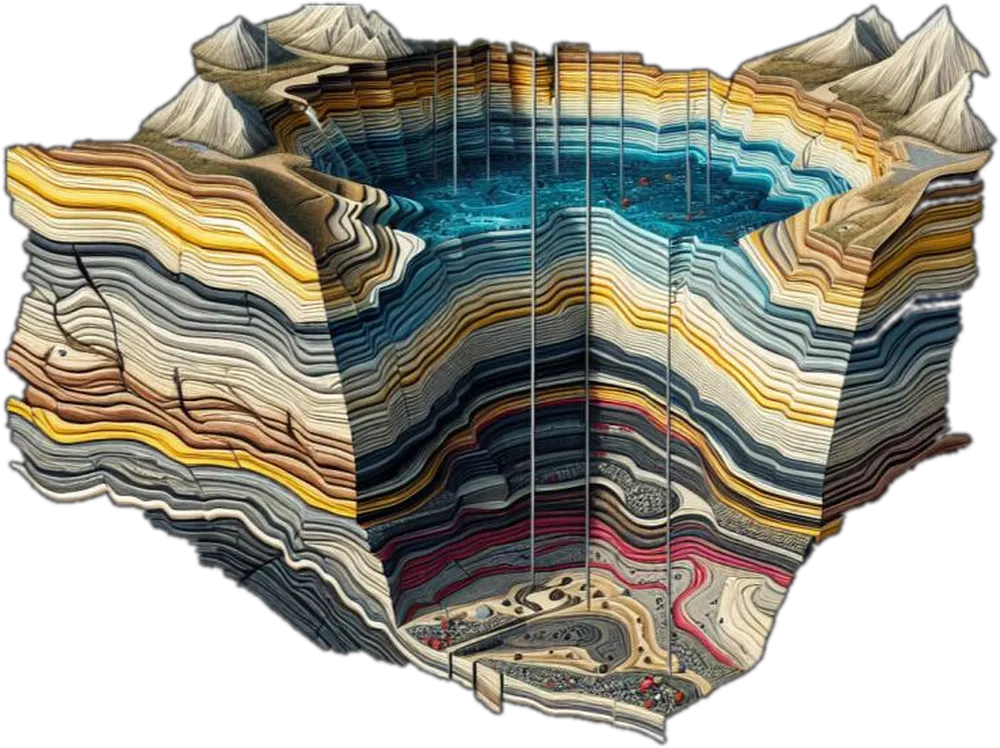 03
Super-resolution output
Up to 5x higher resolution, revealing thin beds and finer stratigraphic detail.
What DIME gives you
-
Higher resolution
Vision-AI foundation models turn low-resolution inputs into up to 5x super-resolution outputs.
-
Multi-band information injection
Well properties are injected across frequency bands, adding information to the 3D volume to optimise accuracy.
-
AI-powered modelling
Bias- and assumption-free deep learning models seismic and rock properties simultaneously.
-
Improved interpretation accuracy
Thin beds, faults and stratigraphic detail become interpretable, so every downstream map rests on sharper data.
Proof on real data
Super-resolution:
creating sharper datasets
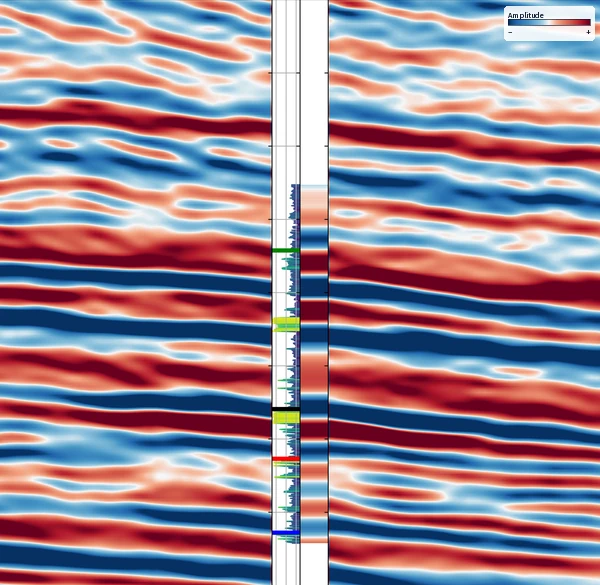
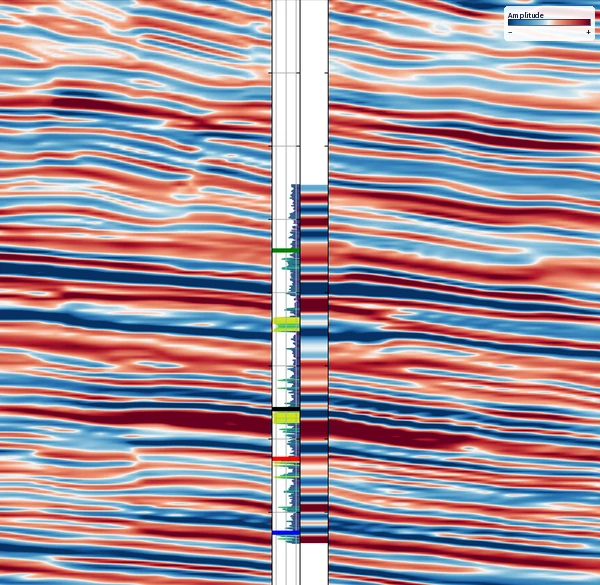
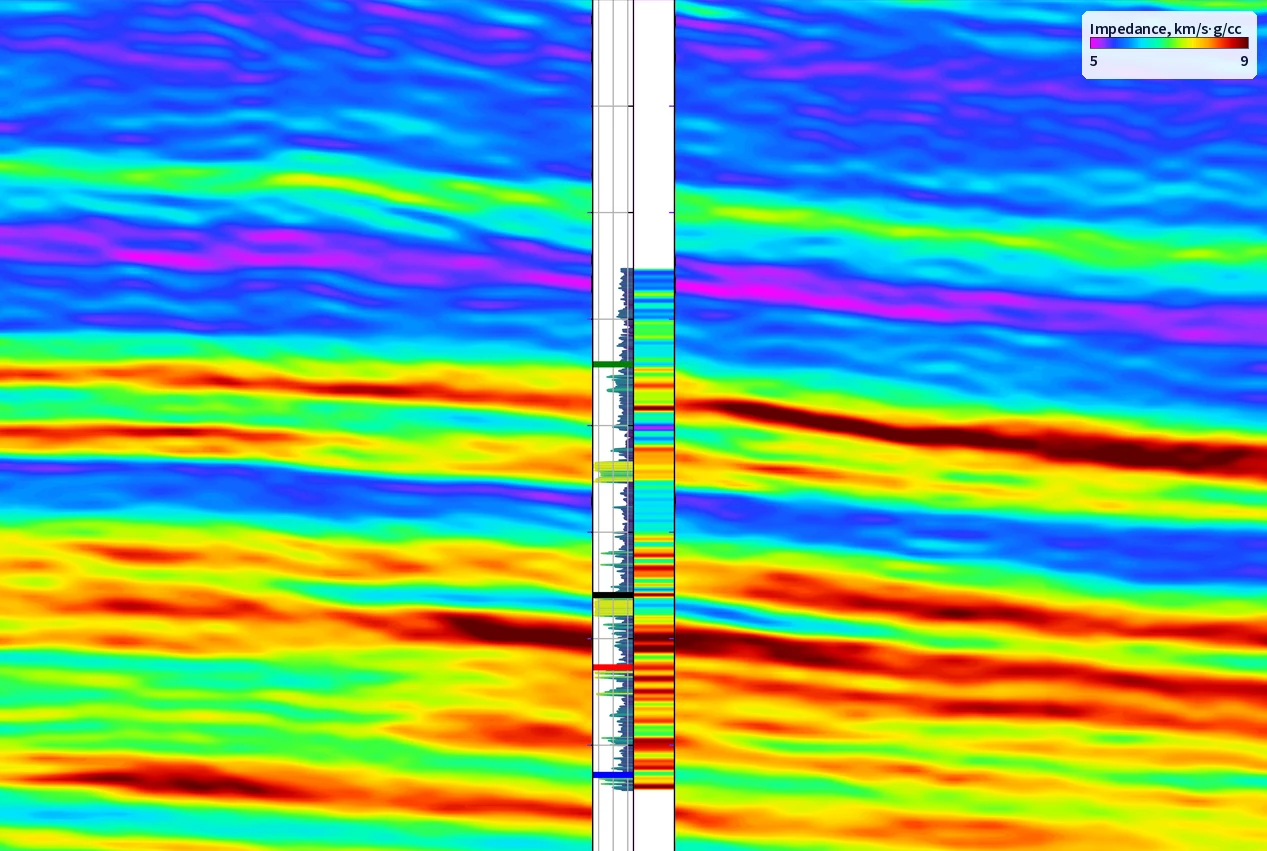
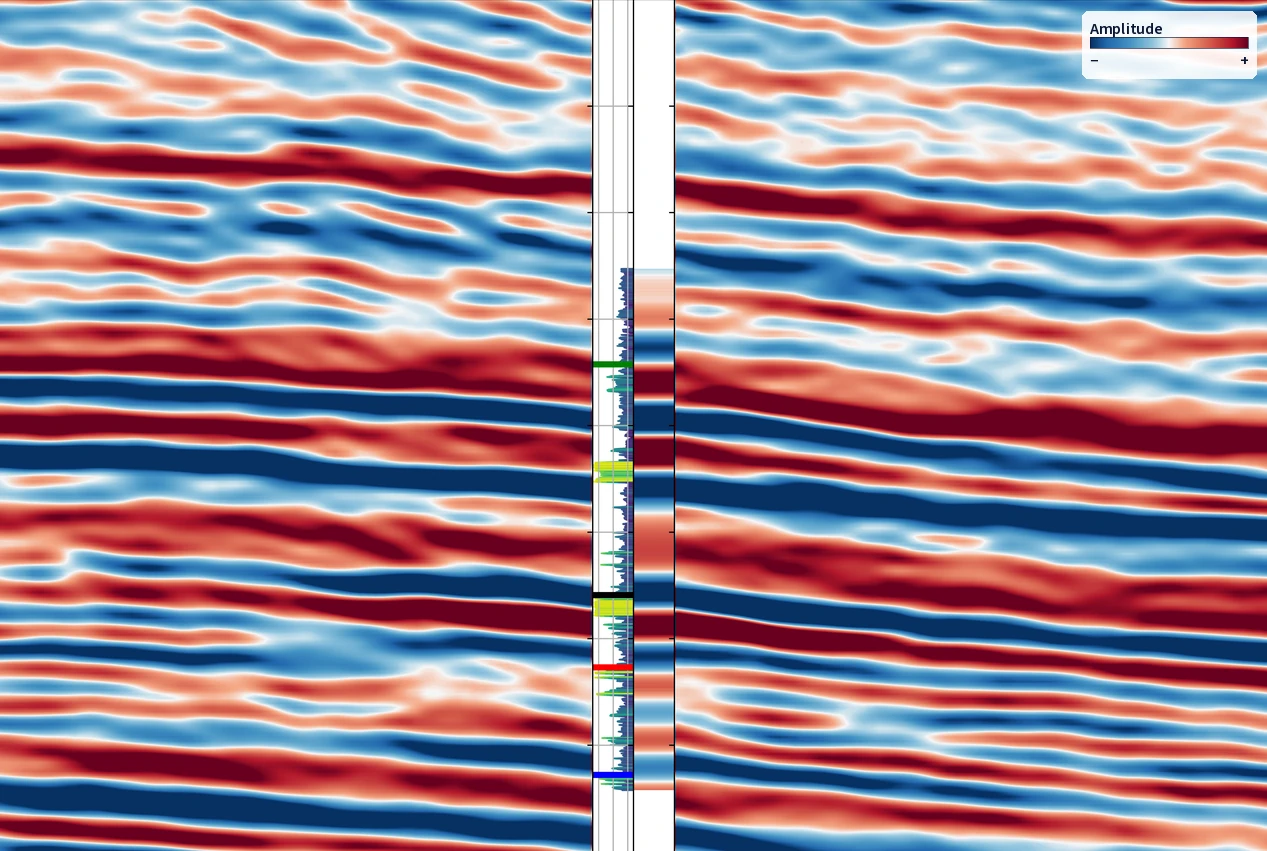
On the left, legacy seismic beside the Storm 3.0 volume. On the right, an industry-standard inversion beside the Strike volume.
Legacy seismic
Storm 3.0 volume
Industry-standard inversion
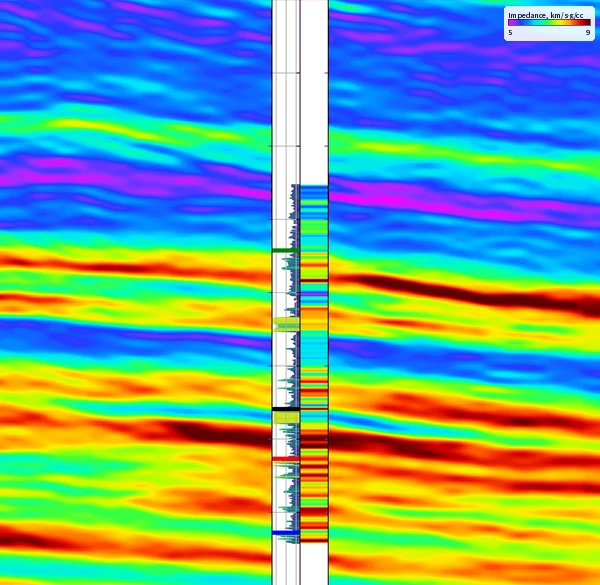
Strike volume
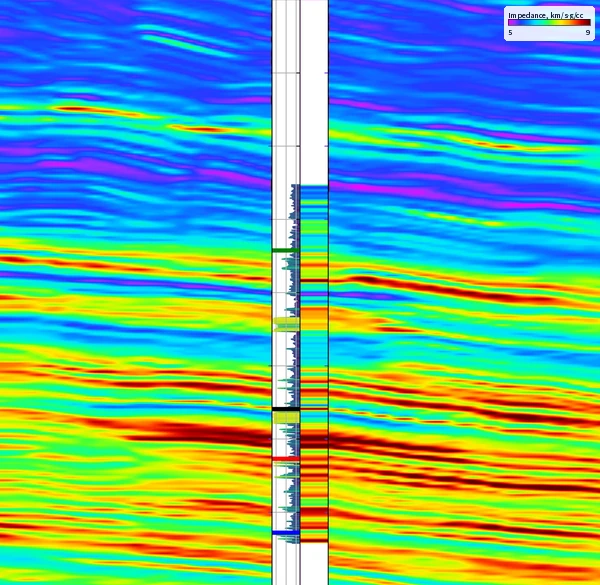
The super-resolution seismic volume Storm 3.0 (left) and the accompanying inversion Strike (right) reveal stratigraphic detail and intricate depositional geometry previously unseen in legacy data.
- Up to 5x
- higher resolution from DIME super-resolution datasets
- 3 m
- thin beds delineated by the Storm 3.0 post-stack volume
- Well scale
- consistent well ties close to well-resolution scale
As the subsurface
comes alive
DIME super-resolution in action. Drag across a real section: an industry-standard inversion on the left, Strike on the right.
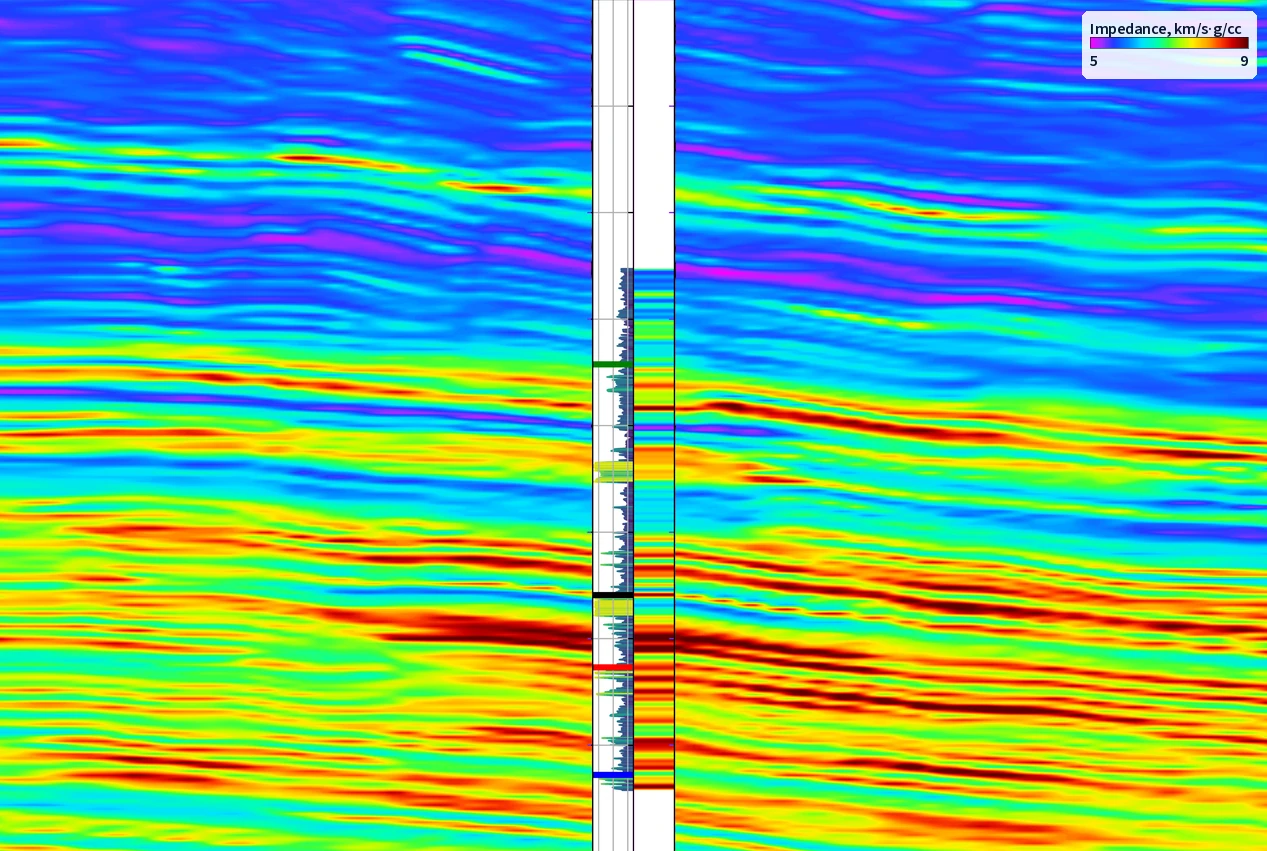 Industry-standard inversion
Strike
-
Reveals hidden geological structures
-
Brings out finer stratigraphic detail
-
Enables more confident decisions in exploration and field development
Come talk to us to learn how DIME can elevate your data to a new level
Reveal the true information value of your existing data in super-resolution.

Look closer
A lens on super-resolution
Move over the legacy seismic section. The lens shows the same spot after Storm, magnified.
 Legacy seismic
 IRA · Deep learning platform
Our deep learning platform
Our deep learning platform creates super-resolution seismic and inversion products, so geoscientists and reservoir engineers can build value-added interpretation workflows.
Conventional workflows are constrained by multiple geophysical assumptions, which leaves their results open to human bias. Adopting modern AI brings its own set of challenges, and they run deeper than they first appear.
Turning seismic data into actionable intelligence, and into a clearer understanding of the subsurface, takes considerable time and effort. This is where Rezlytix changes the game.
-
Intelligent
Smart data I/O, automation and built-in hyperparameter tuning.
-
Robust
Assumption-free, geology-honouring and robust algorithms.
-
Scalable
Cloud-scale, provider-agnostic deployments.
-
Extensible
Customised solutions and rapid prototyping.
Are you extracting every ounce of information from your data?
Unsure where to begin? Our team will review your data and design the best workflow to suit your needs.